About Team SRMSAT
From a pioneering university project to a legacy of space innovation.
The SRMSAT-1 Story
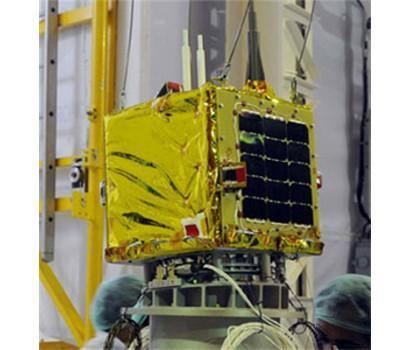
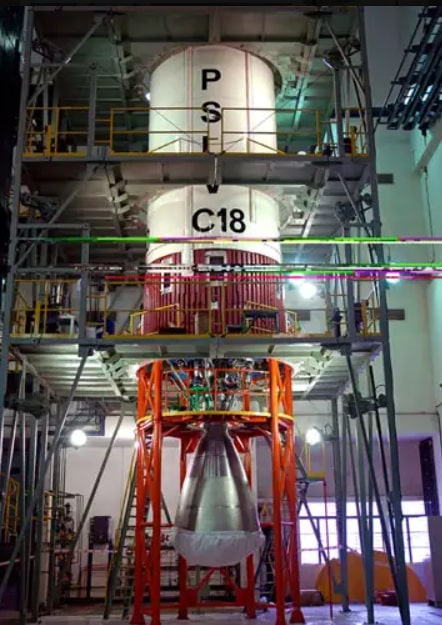
SRMSAT is a pioneering student-built microsatellite developed by the SRM Institute of Science and Technology, in collaboration with ISRO. Launched on October 12, 2011, aboard the PSLV-C18 mission, it marked a significant milestone in India's private university space initiatives.
Technical Specifications
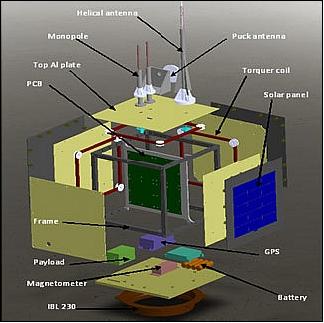
The satellite is a cuboid made out of Al-6061 alloy, with a launch size of 286mm x 286mm x 294mm and a mass of 10.9 kg. The structure was designed as a robust satellite bus, capable of bearing launch loads of ±11g (longitudinal) and ±6g (lateral), making it adaptable for future missions.
Mission Highlights
- Purpose: Demonstration of LEO satellite technology and atmospheric data collection (GHG monitoring).
- Payload: A GHG monitoring sensor to measure levels of water vapor and carbon dioxide.
- Orbit: Sun-synchronous polar orbit at ~720 km altitude.
- Launch Vehicle: PSLV-C18 (ISRO)
The New Team: Driven by Curiosity, Built on Legacy
From launching India's first student-built satellite from a private university to now pushing the limits of what student-led missions can achieve—SRMSAT is back with a bold new vision.
A new generation of engineers, scientists, and space enthusiasts from SRMIST is now leading the charge. The SRMSAT 2.0 team is a multidisciplinary collective of undergraduate and postgraduate students from departments including Aerospace, Mechatronics, ECE, and CSE.
Under expert mentorship and industry collaboration, the team is focused on developing technologies that aim not just for orbit—but for relevance in solving Earth-based challenges.
Our Core Focus Areas

An official student club of SRM Institute of Science and Technology.